
THE COPTIC CHURCH AND ITS MUSIC

The Copts are native Egyptian Christians. According to tradition, Christianity was introduced to Alexandria by the Apostle St Mark around 42AD, during the reign of the Roman Emperor Claudius, and quickly spread throughout Egypt.
The Coptic Church participated in the several doctrinal disputes of the 4th and 5th centuries AD, which centred on the divine and human natures of Jesus. These culminated in the Councils of Nicea and Chalcedon, after which the Coptic Church broke away from the other Orthodox churches. As a result of this, both the Coptic liturgy and its sacred music remain largely unchanged from the earliest days of Christianity. Arguably this is one of the most authentic representations of early Christian music.
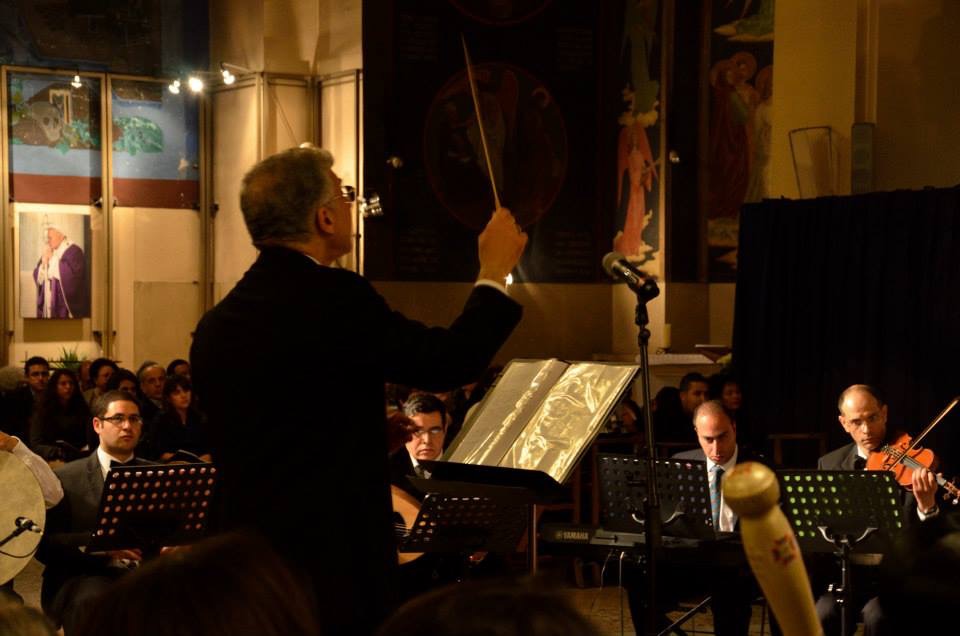
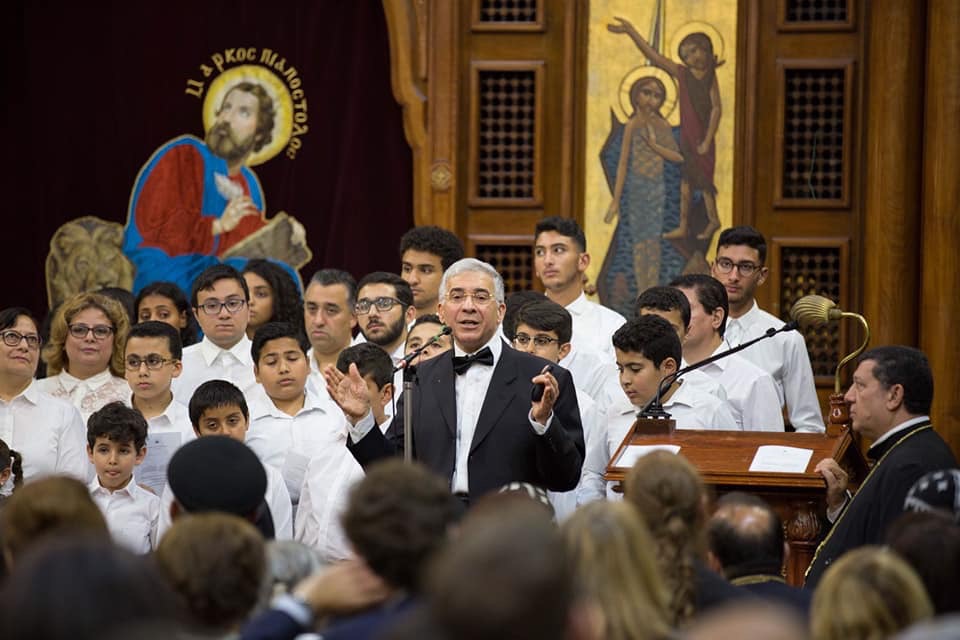
Coptic sacred music consists mainly of chanted hymns using the quarter tones of the Arabic scale. It was transmitted purely through oral tradition until the early 20th century, when some hymns were written in Western musical notation. The entire music for this concert has been transcribed in Western notation by Osama Fathy and can be made available upon request.
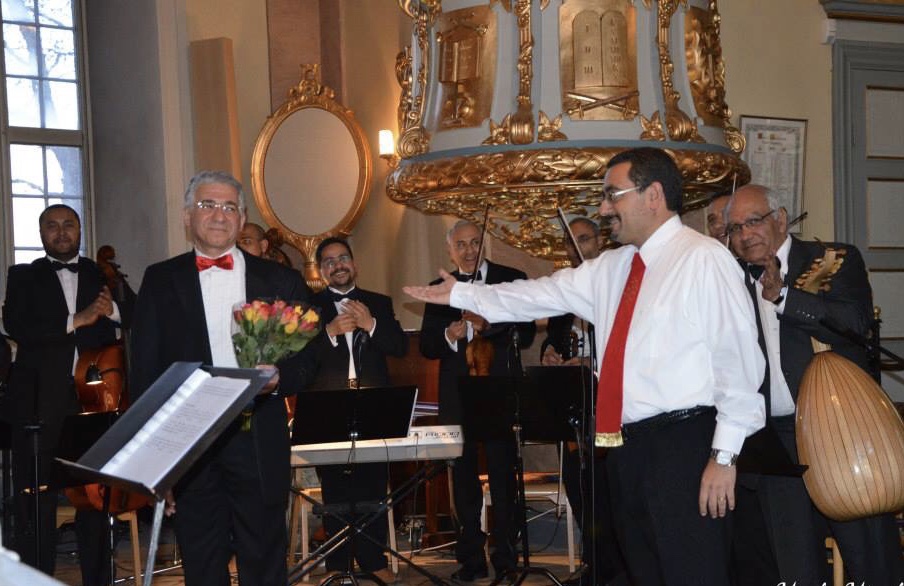
The instruments used in this concert include the lute, nay (a single reed bamboo flute), violin, cello, double base, harp, cymbals, triangle, Kanoun, violas, Oud and drums.
 stkyrelchoir.org